Revolutionizing Building Automation — How 10BASE-T1L Is Replacing BACnet MS/TP and RS-485
In commercial building automation systems, RS-485 (typically paired with BACnet MS/TP or Modbus RTU protocols) has long been the dominant solution for connecting floor-level sensors, VAV (Variable Air Volume) controllers, and electromechanical equipment. Its advantages include low cost and mature installation practices; however, it also has inherent limitations in bandwidth (typically around 76.8 kbps), diagnostic capabilities, and IT integration.
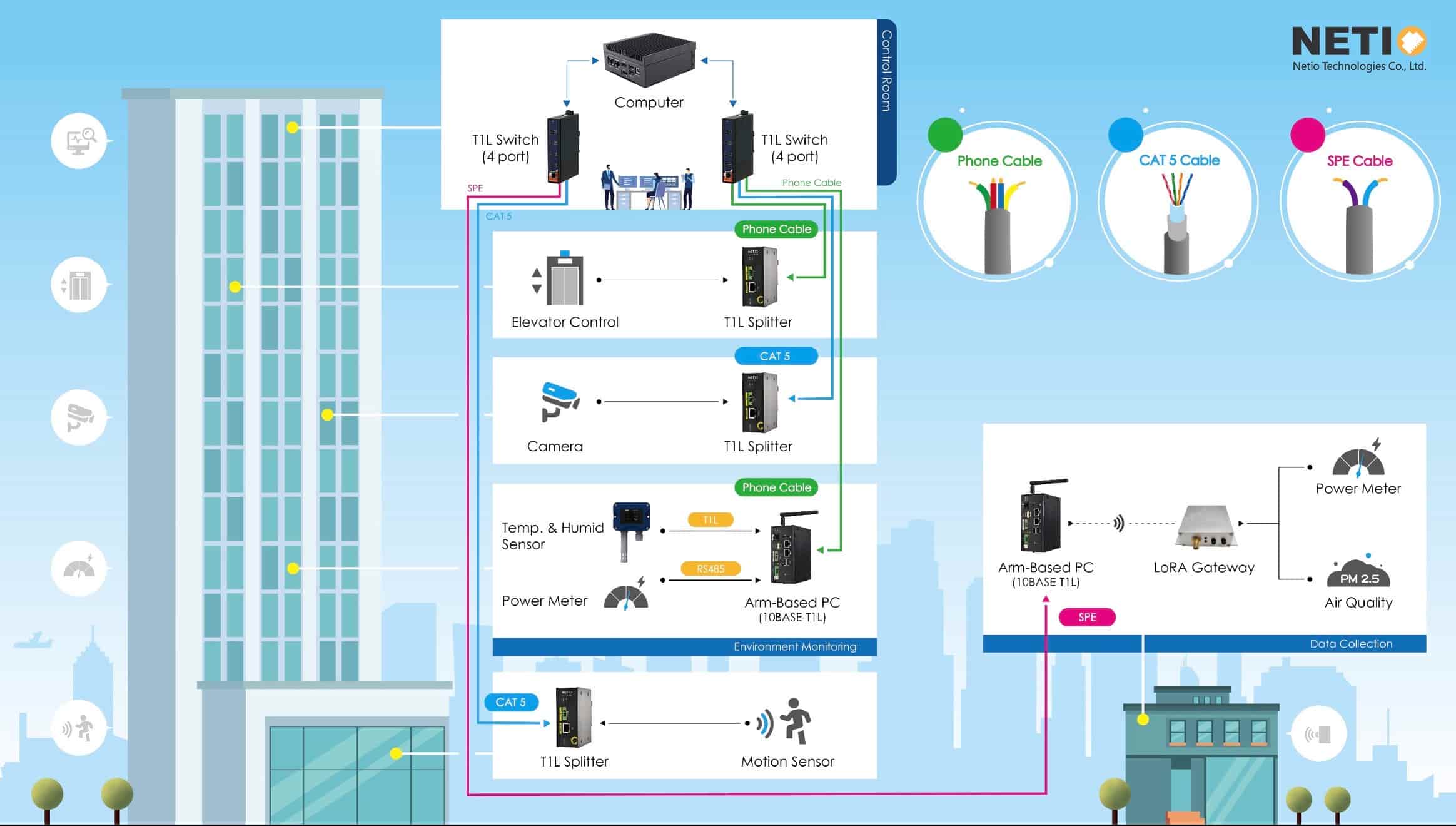
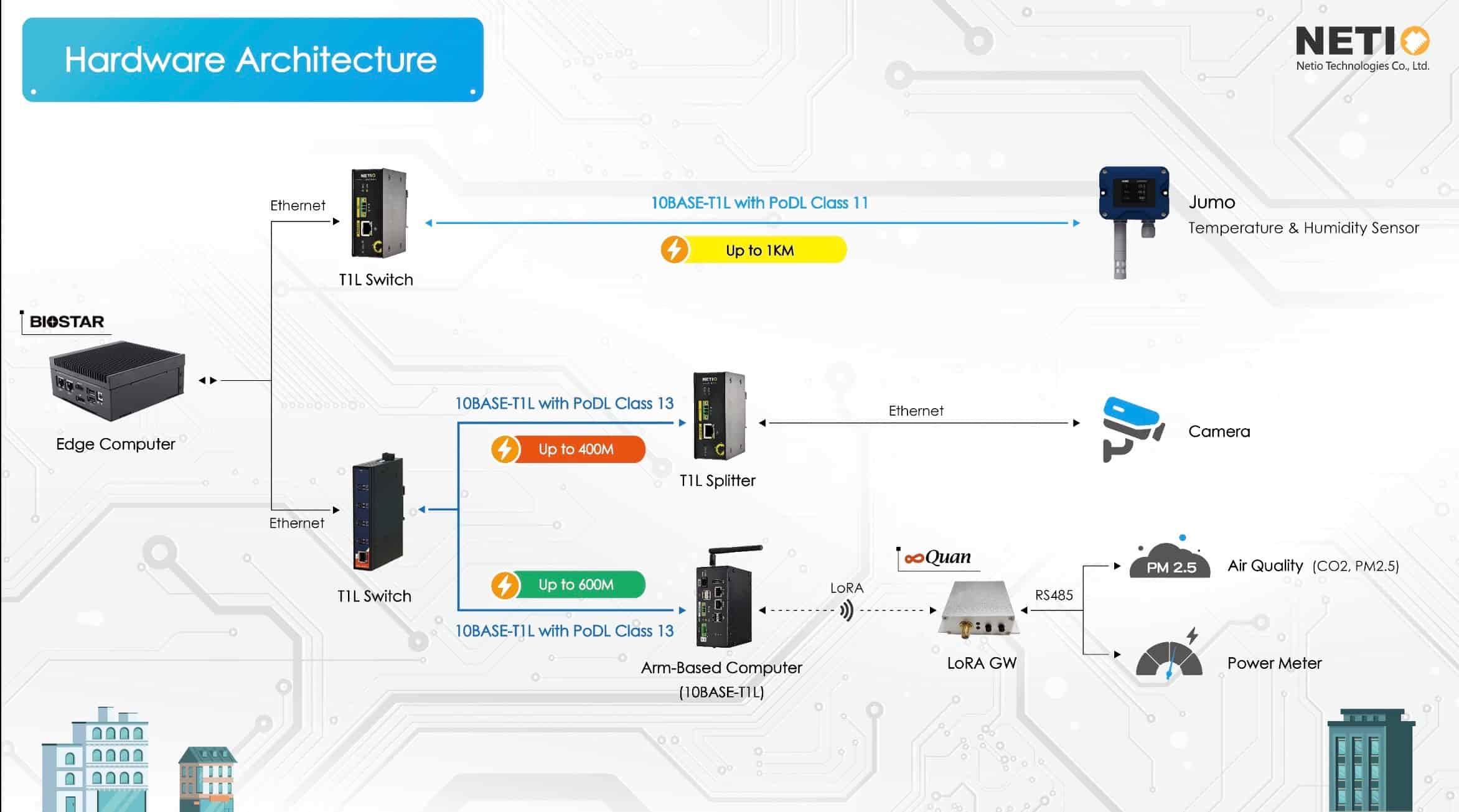
10BASE-T1L is now challenging this long-established architecture with a compelling advantage: it is Ethernet technology that can operate over nearly the same cabling infrastructure as RS-485. Many existing buildings already contain extensive two-wire twisted-pair cabling originally installed for RS-485 or LON bus systems. 10BASE-T1L can directly reuse these existing cables, eliminating the cost of rewiring and minimizing disruption to occupied spaces. From an engineering perspective, this means achieving direct IP network connectivity from field controllers to enterprise networks with minimal infrastructure changes.
At the building automation protocol level, 10BASE-T1L can run BACnet/IP natively. Compared with BACnet MS/TP operating over RS-485, this removes the need for protocol gateways. BACnet/IP devices can connect directly to the IP network just like office computers, significantly simplifying system integration architecture.
In addition, PoDL power delivery enables distributed devices across building floors—such as room controllers and CO₂ sensors—to operate without separate power wiring. This further reduces cabling requirements for both retrofit projects and new building installations.
When deploying 10BASE-T1L in building automation, can existing RS-485 wiring be reused?
Answer
In many cases, yes. Existing two-conductor twisted-pair wiring used for RS-485 or LON bus in buildings can often be reused directly for 10BASE-T1L, eliminating rewiring costs and avoiding disruption to occupied spaces during installation. Cable quality must be assessed first to confirm signal integrity meets the standard at the target distance.
Q2
After adopting 10BASE-T1L, does the BACnet system need to change protocols?
Answer
No. 10BASE-T1L is purely a physical layer technology. BACnet/IP can run directly on top — a more straightforward approach than BACnet MS/TP over RS-485, and one that eliminates the protocol gateway entirely. BACnet/IP devices can join the IP network just like office computers, greatly simplifying system integrator architecture design.
Q3
What specific problem does PoDL solve in building automation scenarios?
Answer
PoDL allows small distributed devices across floors — such as room controllers, CO₂ sensors, and lighting control modules — to operate without separate power wiring. A single twisted pair delivers both data connectivity and operating power simultaneously. This significantly reduces electrical installation work and costs in both building retrofits and new construction projects.
Netio Technologies
Your Best Design Partner !
We use cookies on our website to give you the most relevant experience by remembering your preferences and repeat visits. By clicking “Accept All”, you consent to the use of ALL the cookies. However, you may visit "Cookie Settings" to provide a controlled consent.
This website uses cookies to improve your experience while you navigate through the website. Out of these, the cookies that are categorized as necessary are stored on your browser as they are essential for the working of basic functionalities of the website. We also use third-party cookies that help us analyze and understand how you use this website. These cookies will be stored in your browser only with your consent. You also have the option to opt-out of these cookies. But opting out of some of these cookies may affect your browsing experience.
More product information
Thank you for reaching out. We will get back to you as soon as possible.