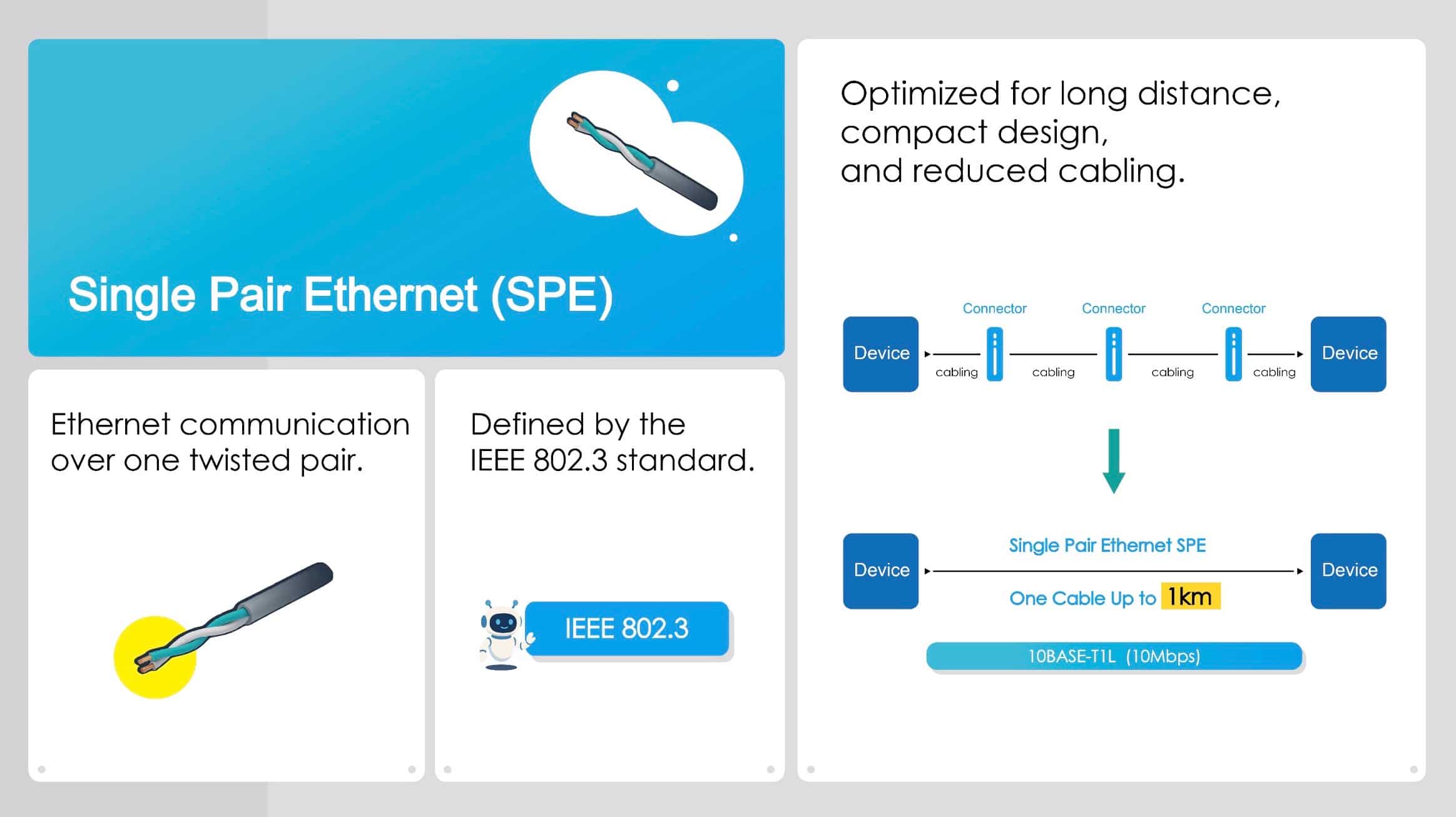
Traditional industrial environments have long relied on 4–20 mA analog signals or various fieldbus systems to connect sensors and controllers. While these solutions are stable and proven, they are increasingly reaching their limits in terms of bandwidth, transmission distance, and integration flexibility—especially when faced with the massive data transmission demands brought by Industry 4.0. Single Pair Ethernet (SPE) was developed in response to these challenges. SPE is a technology that enables Ethernet communication over a single twisted pair of wires and is part of the IEEE 802.3 standards family. Compared with conventional Ethernet, which typically requires four or even eight wires, SPE significantly reduces cabling complexity and cost while extending Ethernet connectivity all the way to the “edge” of the network—down to every sensor and actuator on the factory floor.
The target applications of SPE span three major sectors: automotive (in-vehicle communications), industrial automation (smart manufacturing and process control), and building automation (smart buildings and energy management). These industries share several common characteristics, including large cable volumes, widely distributed nodes, and high sensitivity to weight and cost, making SPE a key enabling technology for next-generation field-level connectivity architectures.
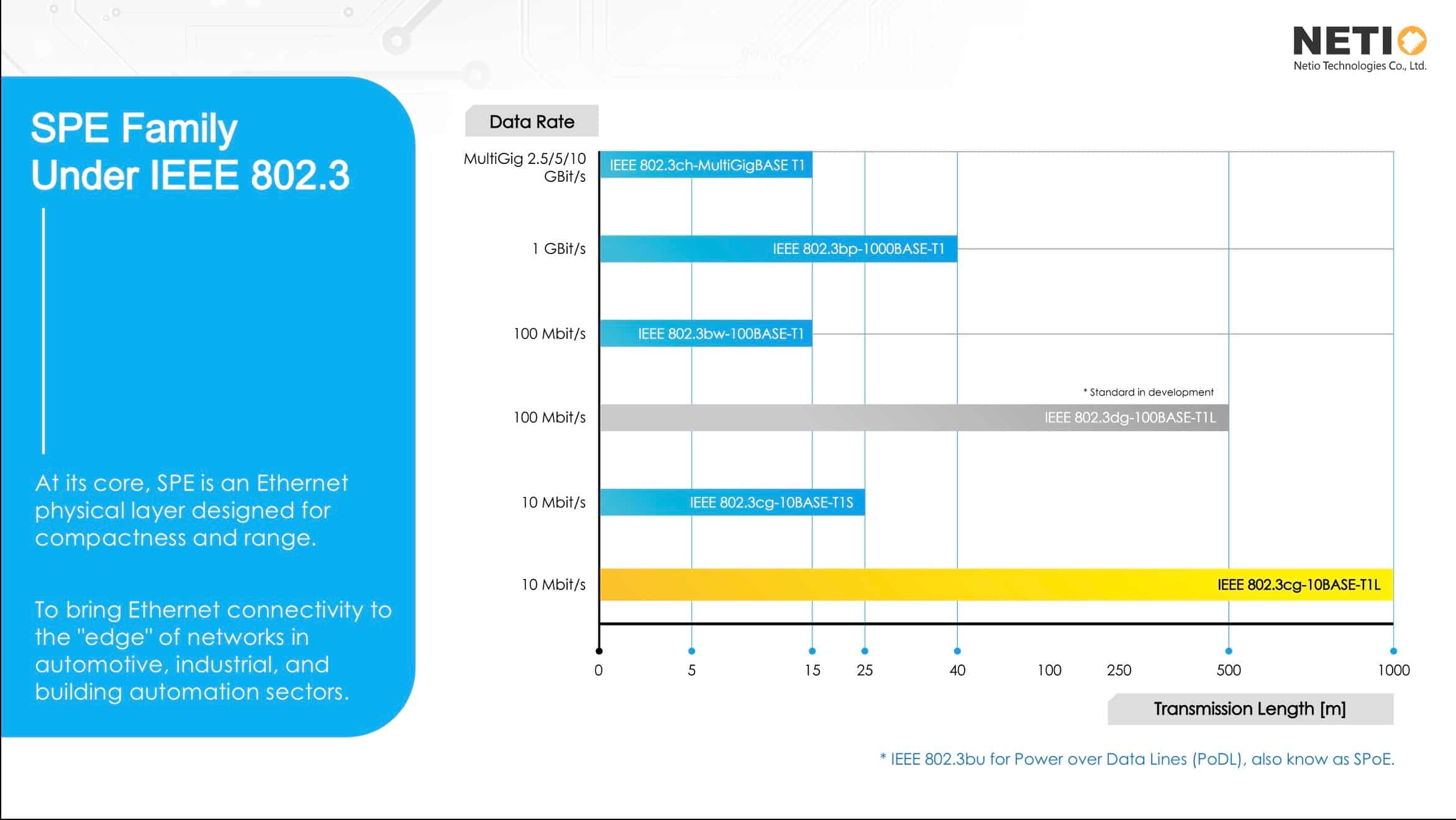
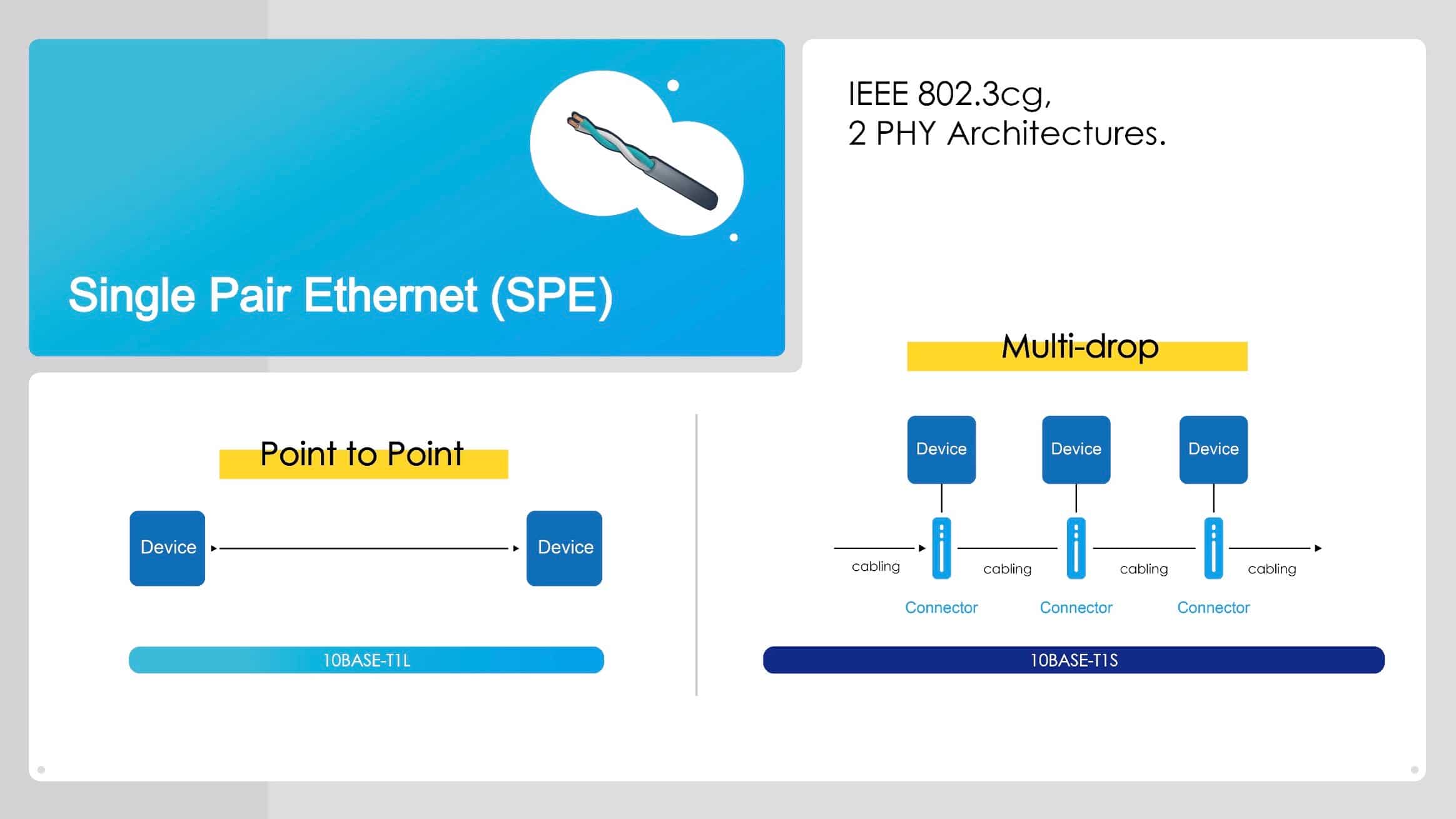
Within the IEEE 802.3 standards family, the SPE standard most closely associated with industrial applications is 10BASE-T1L (IEEE 802.3cg), which is specifically designed for long-distance transmission of up to 1,000 meters. Power delivery is supported by the related IEEE 802.3bu (PoDL, Power over Data Lines) standard, allowing both data and power to be transmitted simultaneously over the same single pair of wires.